...but I think I can pretty easily relate to what they're getting at in this video:
Sunday, December 19, 2010


Sunday, December 12, 2010
Everyone gets in the holiday spirit around here
Portland bagpiping unicyclist dresses for Christmas
No, it's not my camerawork, though I have seen this guy unicycling around Crystal Springs before. I mean, surely there can't be more than one bagpiping unicyclist in Portland, right?
No, it's not my camerawork, though I have seen this guy unicycling around Crystal Springs before. I mean, surely there can't be more than one bagpiping unicyclist in Portland, right?
Saturday, November 27, 2010
Ghosts and rails in old Albina
I’ve always lived in river and railroad towns. When I was old enough to drive around at night on my own, at home in Ashland, KY, my destination after dark was more often than not the boat docks on the Ohio River. I’d park on the steeply sloped, grooved concrete lot, cradled between the barges which were silent but for the slapping of their wakes and the trains. Both were ferrying coal from the bowels of the nearby mountains to wherever it is the coal goes. Sometimes my friends and I would hop a train for a few hundred yards, never quite brave enough to go much further than that. The bridges towered overhead. Everything was moving someplace else. All of us in that group felt the pull of such motion; three of us live on the West Coast now, and none of us in Ashland.
Even before I was old enough to drive, though, I listened to the sounds of the trains at night—as Paul Simon says, “everybody loves the sound of a train in the distance; everybody believes it’s true.” Then the trains were punctuated by the occasional deep whoosh of pouring steel, both swelling up beneath the cicadas in the distant dark.
Old habits die hard. Here, I keep my bedroom window cracked at night even in winter because I so crave the white noise that assures me someone, somewhere, is up as late as I am. Of course, it’s not coal being ferried here; the closest equivalent is timber, torn, skinned, and neatly stacked on its various modes of transport.

And we know Portland has always been a town of water and steel. The water never fades from view; we wear our bridges like banners, or boutonnieres. Of course, the rails are still there too, but a bit more like a corset underneath the fineries of our downtown. In some spots this is more evident than others. The first few blocks on the east side were literally built up around the train tracks; many streets there (like elsewhere in the downtown area) were initially wooden platforms built up to make the bottomlands navigable and the trains accessible.

A recent walk through the old Albina neighborhoods—my last from Laura Foster’s treasure, Portland Hill Walks—took me through many of the blocks near the Union rail yards, underneath the arches of the Fremont Bridge. It’s not the most graceful neighborhood, but there’s a great sense of the past reigns of rails and river. And there’s plenty to love, even in the buildings that seem ready to bow to the weight of time. This one, at 733 N Russell, bears a scarlet letter, a “U” letting firefighters know that it’s unsafe for them to work in.


There’s also, of course, the White Eagle Saloon, owned by McMenamins and sometimes called one of the most haunted sites in Portland. Most of those ghosts are said to date from the time when the saloon served the hundreds of rail workers housed nearby, providing food, drinks, gambling, and sex.

Across the street is one of the more recognizable ghost signs of the area, an advertisement for Headlight Overalls, a pre-shrunk overall from a denim line designed specifically for the demands of a life on the rails. Here is a link to a blog post showcasing one of Headlight's promotional pay calculator and time books for rail workers.

On the other side of the block is a fragment of another sign, promising credit, gladly given. Back then, you didn’t need credit unless you were living the life of a working man. Today, well, we know how normal it’s become. On my walk, I ran into a man, slightly disheveled but mostly clean, asking me for directions. He said he was from out of town, and wanted to know where to find a convenience store. The man took to my dog, petting him, welcoming the affection my dog gives away so freely; he had the distinct look of someone who had just stumbled into town and could use some conversation. Without even realizing it until I wrote this blog post, I assumed the man had just recently jumped off a boxcar. I don’t know if people still travel that way. A small part of me, though, even knowing the perils of that mode of travel, hopes they do.

Even before I was old enough to drive, though, I listened to the sounds of the trains at night—as Paul Simon says, “everybody loves the sound of a train in the distance; everybody believes it’s true.” Then the trains were punctuated by the occasional deep whoosh of pouring steel, both swelling up beneath the cicadas in the distant dark.
Old habits die hard. Here, I keep my bedroom window cracked at night even in winter because I so crave the white noise that assures me someone, somewhere, is up as late as I am. Of course, it’s not coal being ferried here; the closest equivalent is timber, torn, skinned, and neatly stacked on its various modes of transport.

And we know Portland has always been a town of water and steel. The water never fades from view; we wear our bridges like banners, or boutonnieres. Of course, the rails are still there too, but a bit more like a corset underneath the fineries of our downtown. In some spots this is more evident than others. The first few blocks on the east side were literally built up around the train tracks; many streets there (like elsewhere in the downtown area) were initially wooden platforms built up to make the bottomlands navigable and the trains accessible.

A recent walk through the old Albina neighborhoods—my last from Laura Foster’s treasure, Portland Hill Walks—took me through many of the blocks near the Union rail yards, underneath the arches of the Fremont Bridge. It’s not the most graceful neighborhood, but there’s a great sense of the past reigns of rails and river. And there’s plenty to love, even in the buildings that seem ready to bow to the weight of time. This one, at 733 N Russell, bears a scarlet letter, a “U” letting firefighters know that it’s unsafe for them to work in.


There’s also, of course, the White Eagle Saloon, owned by McMenamins and sometimes called one of the most haunted sites in Portland. Most of those ghosts are said to date from the time when the saloon served the hundreds of rail workers housed nearby, providing food, drinks, gambling, and sex.

Across the street is one of the more recognizable ghost signs of the area, an advertisement for Headlight Overalls, a pre-shrunk overall from a denim line designed specifically for the demands of a life on the rails. Here is a link to a blog post showcasing one of Headlight's promotional pay calculator and time books for rail workers.

On the other side of the block is a fragment of another sign, promising credit, gladly given. Back then, you didn’t need credit unless you were living the life of a working man. Today, well, we know how normal it’s become. On my walk, I ran into a man, slightly disheveled but mostly clean, asking me for directions. He said he was from out of town, and wanted to know where to find a convenience store. The man took to my dog, petting him, welcoming the affection my dog gives away so freely; he had the distinct look of someone who had just stumbled into town and could use some conversation. Without even realizing it until I wrote this blog post, I assumed the man had just recently jumped off a boxcar. I don’t know if people still travel that way. A small part of me, though, even knowing the perils of that mode of travel, hopes they do.

Tuesday, November 2, 2010
Seasonal riches

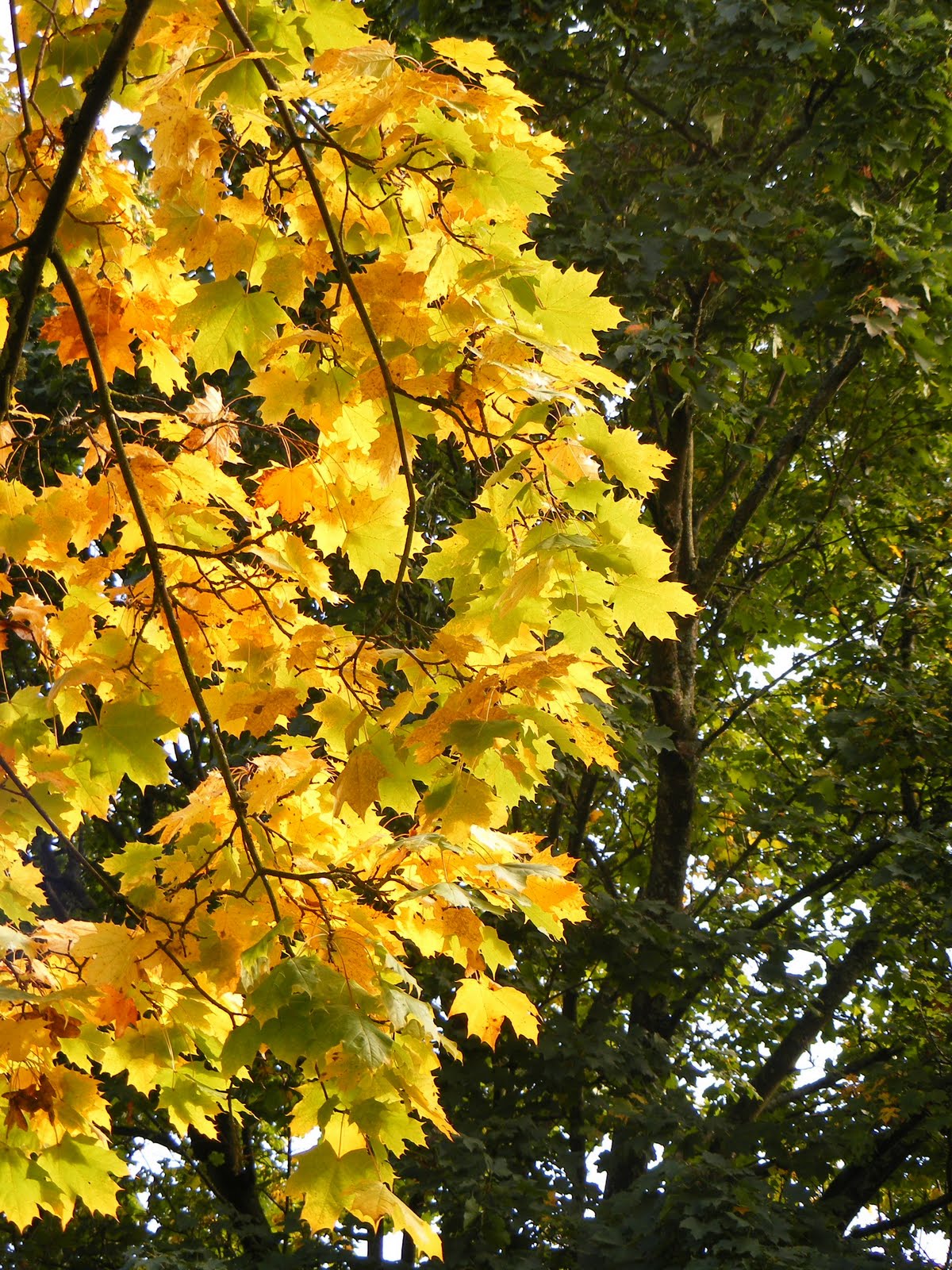
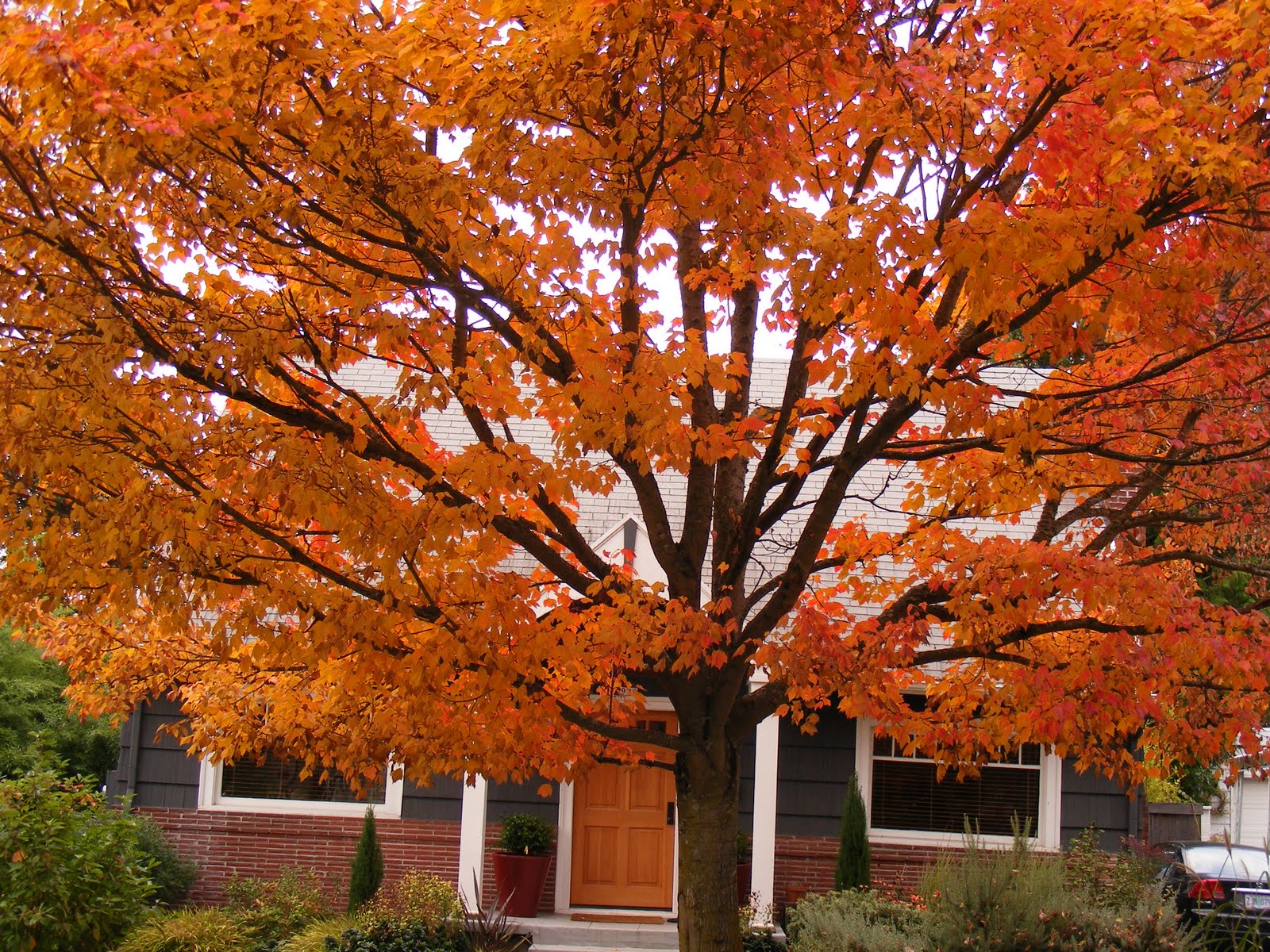
We really do live in a breathtakingly beautiful city. So, on this election eve, I'm posting a few photos I've taken over the past two weeks or so in the Sellwood, North Tabor, Rose City Park, and Alameda neighborhoods-- plus one from NW 23rd. Sigh. If only campaigns were so lovely and elegant. (Oh,and as a nod to my daughter: none of these was manipulated--other than a crop of the NW 23rd photo-- after it was taken. The colors are really that stunning.)




Saturday, October 23, 2010
Braaaaiiiiiinnnnnsss...


PDX Zombie Walk 2010. Although these started in Sacramento about ten years ago, they just fit so nicely into the Portland psyche. And besides, there are too many good photo ops to ignore.


OK, so the last one technically may or may not be a zombie, but he's just so stinkin' cute he needed to be appreciated here.
And yes, that is the children's book hero Bunnicula.
Friday, October 22, 2010
An auditorium by any other name...
Last spring I was in Lincoln City, staying at a friend's beach house with some family visiting from West Virginia. One of the days we were there we ventured into town, visiting my daughter's favorite LC store, The Rocking Horse. The Rocking Horse has a prodigious collection of vintage and antique postcards which swallowed a good hour (at least) of my time that day.
I came home with this 25-cent treasure.

As a new-ish Portlander, I had to search for a while before I could figure out what building this actually was. It's certainly not one I remembered seeing before, and I soon discovered why: this building--now known as the Keller Auditorium, a building I'd definitely visited!--had undergone some pretty radical revisions in its century-long life. Here's a picture of it in 1958, ten years before the radical 1968 renovation which transformed it into a bastion of the International style so popular at the time. At that point, pre-1968, it was still known as the Portland Municipal Auditorium.

And here, in case you need a reminder, is what the building was transformed into (this photo taken only a few years after the update). It was also given the new, and more familiar, name The Portland Civic Auditorium. No wonder it was so hard to recognize.

I'm not a great judge of international style architecture; sometimes it strikes me with its elegant restraint, but I generally favor older buildings, like (ahem) them one in the original postcard. I am amused, however, by architecture critic Ada Louise Huxtable's description of the building as "a building of unrelieved blandness."
I don't entirely agree, though, as the west-facing wall of windows simply glows when the interior lights are lit, letting passersby have a glimpse at a very glittery world inside while patrons have a wonderful view on the Keller Fountain across the street.
This brings me to the final impetus for compiling this post. A couple of weeks ago, I was fortunate enough to go to the Keller for the open OBT company class and technical rehearsal for Sleeping Beauty. Although it really was fascinating to see the inner workings of the ballet, between dance sessions I was distracted enough to snap these two shots on my phone camera. Other than that entrance, it's my humble opinion that the exterior of the building underplays expectations for the interior. The lights alone sparkle with elegance.


Maybe this lighting configuration was a product of the most recent renovation--funded by Ira Keller--in 2000, the one which gained the auditorium its current name. In any case, what a history there is to this place. Thank you, Rocking Horse, for a great treasure hunt!
I came home with this 25-cent treasure.

As a new-ish Portlander, I had to search for a while before I could figure out what building this actually was. It's certainly not one I remembered seeing before, and I soon discovered why: this building--now known as the Keller Auditorium, a building I'd definitely visited!--had undergone some pretty radical revisions in its century-long life. Here's a picture of it in 1958, ten years before the radical 1968 renovation which transformed it into a bastion of the International style so popular at the time. At that point, pre-1968, it was still known as the Portland Municipal Auditorium.

And here, in case you need a reminder, is what the building was transformed into (this photo taken only a few years after the update). It was also given the new, and more familiar, name The Portland Civic Auditorium. No wonder it was so hard to recognize.

I'm not a great judge of international style architecture; sometimes it strikes me with its elegant restraint, but I generally favor older buildings, like (ahem) them one in the original postcard. I am amused, however, by architecture critic Ada Louise Huxtable's description of the building as "a building of unrelieved blandness."
I don't entirely agree, though, as the west-facing wall of windows simply glows when the interior lights are lit, letting passersby have a glimpse at a very glittery world inside while patrons have a wonderful view on the Keller Fountain across the street.
This brings me to the final impetus for compiling this post. A couple of weeks ago, I was fortunate enough to go to the Keller for the open OBT company class and technical rehearsal for Sleeping Beauty. Although it really was fascinating to see the inner workings of the ballet, between dance sessions I was distracted enough to snap these two shots on my phone camera. Other than that entrance, it's my humble opinion that the exterior of the building underplays expectations for the interior. The lights alone sparkle with elegance.


Maybe this lighting configuration was a product of the most recent renovation--funded by Ira Keller--in 2000, the one which gained the auditorium its current name. In any case, what a history there is to this place. Thank you, Rocking Horse, for a great treasure hunt!
Friday, September 24, 2010
Reed canyon, early fall


The four acre Reed Lake, which takes up a good portion of the canyon, is purportedly "the oldest naturally occurring lake in Portland", though whether or not it's actually natural has been debated over the years. It's all part of a land donation from the erstwhile William Ladd, and there are traces of the former agricultural purposes of the land strewn throughout the Reed campus.
The canyon has at various times held the aquifier for Ladd's cattle, a wildlife refuge, a fish hatchery, two bath houses, and an outdoor swimming pool.

Today, it's an urban oasis, as well as a valuable site for Reedies interested in some hands-on natural resources studies.


Subscribe to:
Posts (Atom)